
🕷️What if a tick-borne bacterium doesn’t just tolerate the tick… what if it actually helps the tick molt?
To be super clear: this is still speculation. We’re not claiming mechanism, we’re not claiming proof, and we’re definitely not naming a specific unpublished protein like it’s already convicted in court 😂🚫. But as a concept, it’s scientifically plausible — and honestly, kind of elegant in a dark evolutionary way.
Because here’s the thing: for many vector-borne pathogens, the tick isn’t just a place to hide. The tick is the vehicle 🚍. The microbe is the passenger. And if the passenger wants to stay in nature, it needs the vehicle to keep moving.
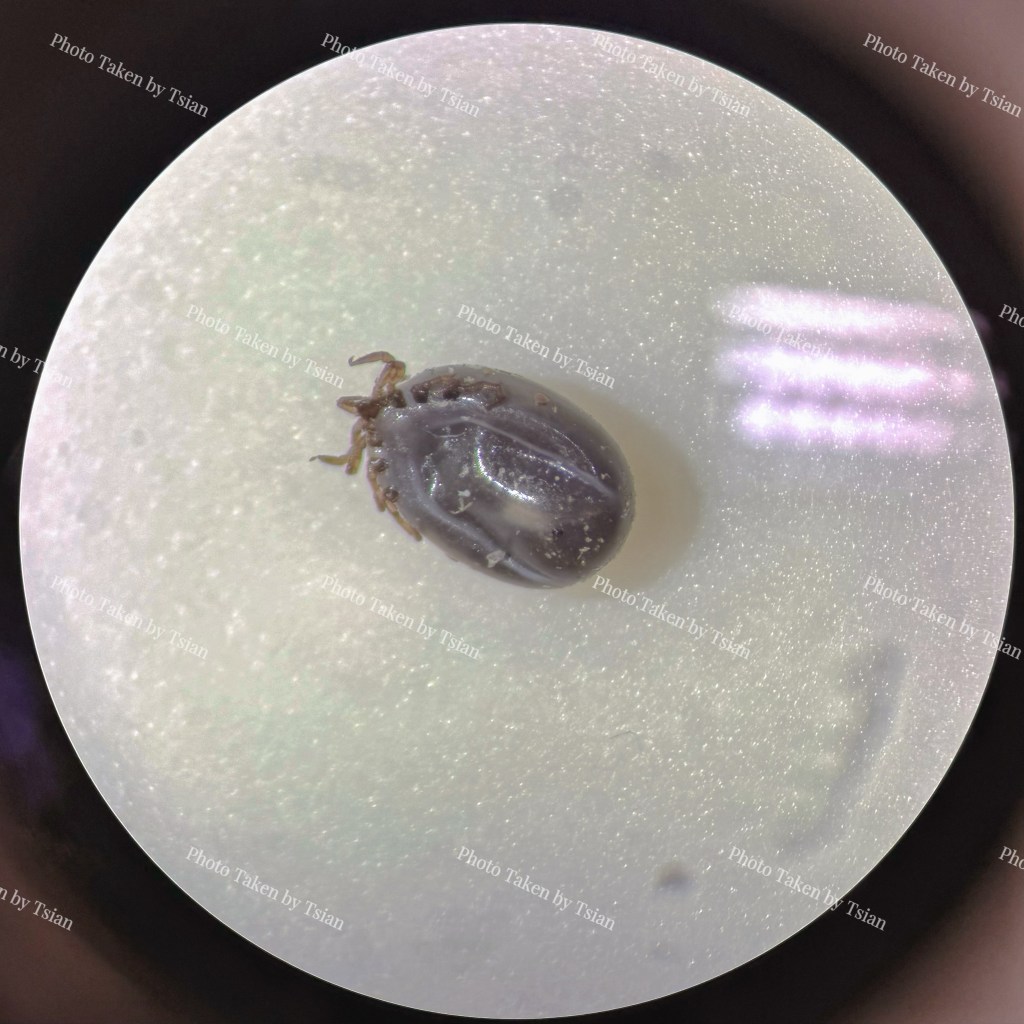
Ticks don’t stay the same forever. In hard ticks (like Ixodes, Amblyomma, Dermacentor), the life stages go larva → nymph → adult, with a blood meal before each molt. So if a pathogen depends on tick development to persist across time, it would benefit massively from any strategy that improves tick survival and molting success.
Many tick-borne pathogens aren’t “one-and-done.” They need to survive through the tick’s transformations so they’re still around when the tick bites its next host. If the tick can’t molt, the microbe loses the ride. If the microbe can’t survive molting, it gets wiped out mid-transition. 🙂 Either way: transmission collapses. The cycle ends. Nature unsubscribes.
So if you’re a microbe with a long-term plan, you might not want the tick to suffer. You might want the tick to thrive — at least enough to complete the molt and keep feeding.
Molting isn’t “shedding skin.” It’s endocrine timing + tissue remodeling + stress management 🧠🧪
Tick molting is a real physiological process, and like other arthropods it happens in two main steps: 👀apolysis, when the old cuticle separates from the epidermis, followed by 👀ecdysis, when the tick sheds that old cuticle.
Meanwhile, the tick is building a new cuticle underneath — made of chitin and a big assortment of cuticular proteins that determine strength, flexibility, and water barrier function. If the cuticle doesn’t form correctly, the tick becomes fragile, dehydrated, or mechanically unstable. In other words: “armor crafting” has to work perfectly 🛡️🕷️.
This process is strongly controlled by arthropod hormones, especially ecdysteroids, including 20-hydroxyecdysone (20E) 📈. Ecdysteroid levels rise and fall in carefully timed waves during development. Even though ticks aren’t insects (and tick endocrinology has its own quirks), the theme is consistent: molting happens because internal hormonal and metabolic cues say NOW. Not earlier. Not later. Not “whenever you feel like it.”
And ticks don’t just molt because they ate. They molt when their internal state says: 👍enough resources! 👍correct timing! 👍tissues prepared! 👍stress under control! AND 👍developmental program activated!
That means molting is a threshold decision. If something pushes the tick out of balance during the post-feeding period, it can delay the molt, fail it, or die attempting it.
So now comes the intrusive thought: what if a microbe helps stabilize that transition? 😭🧬
Not as a “friend.” More like… an investor protecting their portfolio.
Blood meals are both a feast and a chemical disaster 🍽️☣️
Ticks are basically tiny vampires with a very intense lifestyle. 🩸 A blood meal gives them nutrients, but also creates major physiological stress. Blood is rich in heme and iron, which can drive oxidative stress through reactive oxygen species (ROS). Managing ROS matters because oxidative damage can mess with membranes, proteins, and tissue health — aka all the things you don’t want breaking during molting.
Ticks and their microbes are constantly balancing this post-feeding chaos. Ticks use antioxidant defenses and iron-handling systems (like ferritin-related storage and transport pathways) to deal with the iron overload. Their gut also has to process a huge sudden input of proteins, lipids, and heme. The midgut environment changes. The tick’s metabolism ramps up. Everything is busy! 🧪⚡️
In many arthropods, feeding triggers formation of barriers like a peritrophic matrix (a semi-protective gut layer). Ticks have their own versions of gut remodeling and protective strategies. Either way, the post-feeding period is not quiet. It’s a metabolic storm.
So it’s very plausible that molting success could depend not just on hormones, but also on whether the tick can survive the post-feeding stress window long enough to commit to development.
And here’s where a pathogen could matter: intracellular bacteria are not passive. Many secrete effectors that can modulate host cell survival, signaling, transcription, and cytoskeleton dynamics. 😈 If a pathogen factor reduces stress, stabilizes tissues, or prevents premature damage, then the tick could have a higher chance of successful molting.
In that scenario, a “missing factor” wouldn’t necessarily cause molting failure directly. It might simply remove a survival advantage the tick had during the most stressful stage of its life.
Immunity costs energy — and energy is EVERYTHING during molting 🧨🕷️
Ticks don’t have adaptive immunity like mammals (no antibodies, no B cells), but they do have robust innate defenses. 💪 They can produce antimicrobial peptides, activate cellular responses, and trigger oxidative mechanisms that limit microbes. Immune activation isn’t free. It costs resources. And during development, resource allocation is everything.
In many organisms, strong immune activation can interfere with growth and development because the body has to prioritize defense over rebuilding tissues. Molting requires coordinated remodeling — epidermis, cuticle synthesis, water balance, tissue stabilization, and often changes in organs like salivary glands and gut.
💡 So here’s another plausible speculation: a pathogen may normally tune tick immunity down just enough to prevent “developmental chaos.”
Not because it wants the tick healthy, but because a stable tick is a better long-term habitat and transmission platform.
If a hypothetical mutant bacterium 😳 lacks the “calm-down-the-host” ability, the tick might mount a stronger stress/immune-like response. That response could disrupt molting programs, delay the process, or increase failure rates.
Molting needs signaling networks, and microbes LOVE hijacking signaling networks 🔌🧠
Another layer: molting is driven by 💡 networks beyond just ecdysteroids. In arthropods broadly, nutrient sensing pathways like insulin/IGF-like signaling and growth-control pathways like TOR (target of rapamycin) are often involved in deciding whether development proceeds. Feeding status signals whether enough energy exists to support growth and remodeling.
Ticks definitely respond to feeding in dramatic ways: after engorgement, the body is transitioning from “feed and store” to “rebuild and advance.” That means internal nutrient signaling matters.
So it is completely reasonable 👀 to wonder whether a pathogen factor could influence those pathways indirectly — by stabilizing metabolism, protecting cells from stress, or keeping signaling thresholds intact. Again, not magic. Just probability.
If a tick’s internal state has to hit “ready to molt,” then anything that shifts that readiness downward could reduce molting success. 📉
The microbiome + symbionts angle is HUGE 🦠🤝🕷️
Ticks are not solo creatures. Many ticks carry bacterial communities and endosymbionts that can impact tick survival and reproduction.
Some tick endosymbionts basically act like the tick’s tiny internal multivitamin 💊🕷️—because living on a blood-only diet is kind of like surviving on protein shakes forever: filling, but not exactly “complete nutrition.” These symbionts are thought to help by supplementing essential micronutrients, especially B vitamins, which ticks need for metabolism and development. Depending on the tick species, the usual suspects you’ll see in the literature include Coxiella-like endosymbionts, Francisella-like endosymbionts, and some Rickettsia species… plus a whole supporting cast of other microscopic roommates. 🦠
Even if a pathogen is not a “symbiont,” it still lives inside this ecosystem. Infection can change microbiome balance, immune tone, and metabolic environment. So a pathogen could affect molting by influencing the microbial community indirectly.
That would be wild because it implies the tick’s ability to molt isn’t only about the tick itself — it’s about the community state inside the tick.
The pathogen’s selfish logic: “If you don’t molt, I don’t travel.” 🚍🧬
This is the part I find weirdly poetic (and also mildly cursed). Many tick-borne pathogens don’t benefit from killing the vector. The vector is the entire transmission strategy. From the microbe’s perspective, the tick is not a victim. It’s infrastructure.
So a microbe that improves tick molting success gains a massive evolutionary advantage because it increases: the tick’s survival through life stages, the microbe’s ability to persist transstadially, and the chance of reaching a new host.
In that world, helping the tick molt is not a “bonus.” It’s central to staying in circulation.
So what might “Molt Buddy” actually be doing? (hypothetically 👀)
If I had to describe the most realistic version of this in plain language, I’d say:
A bacterial factor could be supporting the tick’s molting success by helping maintain homeostasis during the feeding-to-molt transition.
That could mean: reducing oxidative stress damage in key tissues 🧪 stabilizing host cell survival pathways (preventing premature cell death) 🫀 tuning immune activation down to avoid developmental disruption 🛑 supporting signaling thresholds that decide if molting proceeds 🔁 improving gut integrity after feeding 🍽️ indirectly supporting nutrient utilization and energy balance ⚡️
Notice how none of this requires the pathogen to “control molting directly.” It just needs to adjust the tick’s internal stability enough that molting becomes more likely to succeed.
And if a microbe normally provides that support, then a microbe missing it could still infect, but the host’s success rate drops.
Not because the tick is broken. Because the tick is unsupported. 😭🕷️
Okay… but do parasites really help hosts in nature? YES. Constantly. 😈🤝
It feels emotionally wrong, but biologically it happens all the time. When survival is linked, “helping” can be a transmission strategy.
A classic example: Wolbachia bacteria are essential for the survival and fertility of many filarial worms. Kill Wolbachia → worms suffer. That’s not friendship, it’s dependency. 😭
In insects, some symbionts act like built-in bodyguards. For example, the bacterium Hamiltonella defensa can live inside pea aphids and protect them from parasitoid wasps (wasps that lay eggs inside the aphid). Aphids carrying H. defensa are much more likely to survive these attacks, which benefits both the aphid and the symbiont—because a healthier, longer-lived host is a better place to live and spread. 🐛🛡️🦠
So I’m not surprised our lab found evidence pointing in this direction. A tick-borne microbe increasing molting success is a testable hypothesis that fits evolutionary logic: anything that improves vector fitness and life-stage progression can ultimately increase pathogen persistence and transmission.
The cursed conclusion (still speculation 😇)
So if I had to summarize my current favorite theory in one sentence, it’s this:
A tick-borne pathogen may carry a factor that helps ticks successfully molt — not out of kindness, but because molting keeps the transmission cycle alive. 🕷️➡️🧬➡️🚍➡️🩸
Until this is published and fully tested, I’m calling the mysterious missing piece:
Molt Buddy ✨
the hypothetical “tick upgrade patch” that helps ticks survive the glow-up.
Disclaimer: This is 100% speculation and 0% citations. 🧠 I am not presenting facts and conclusions. I am presenting thoughts. 💭
 TSIAN
TSIAN 